Painted Block Chimney Rebuilt from the Ground Up
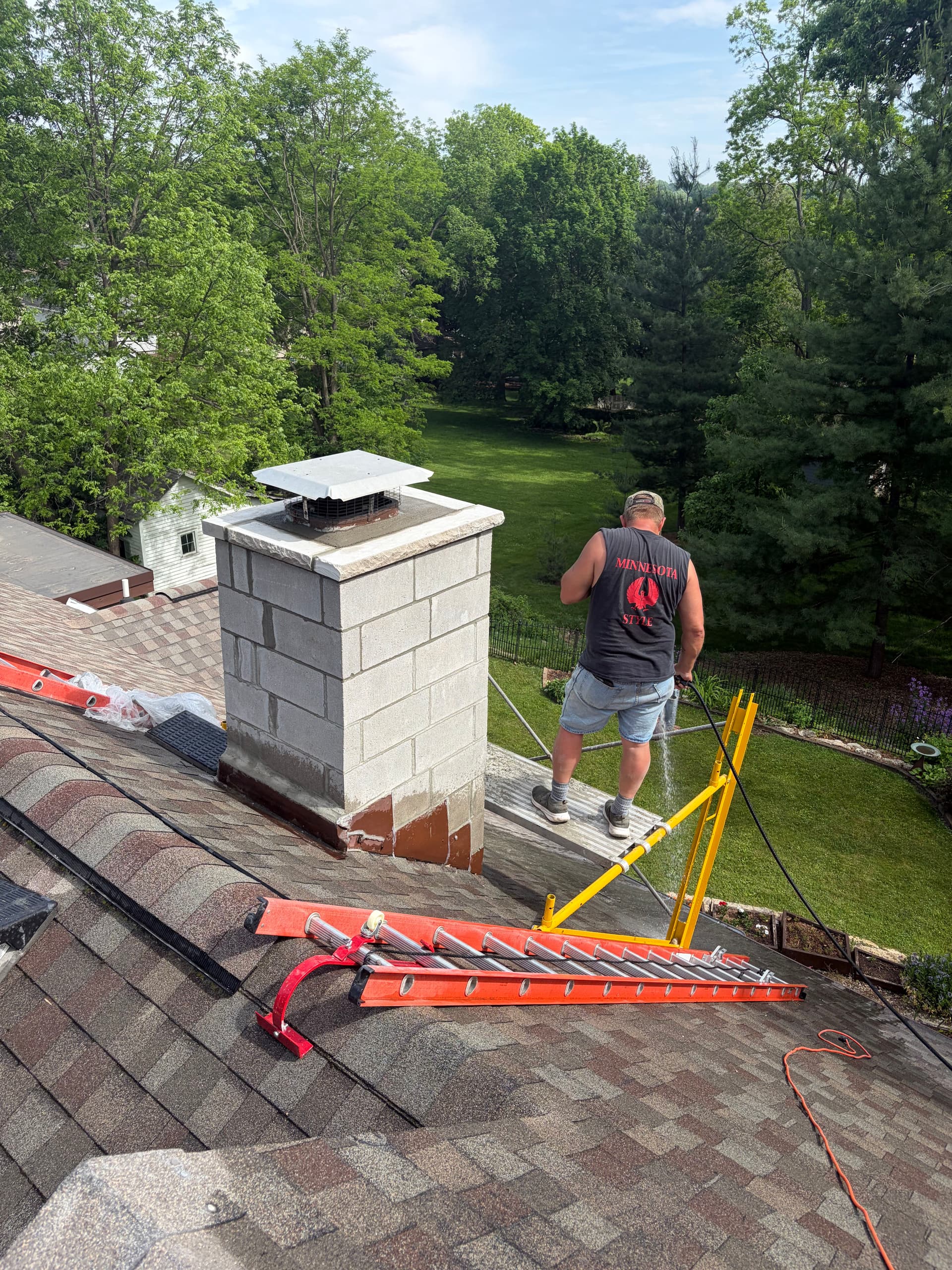
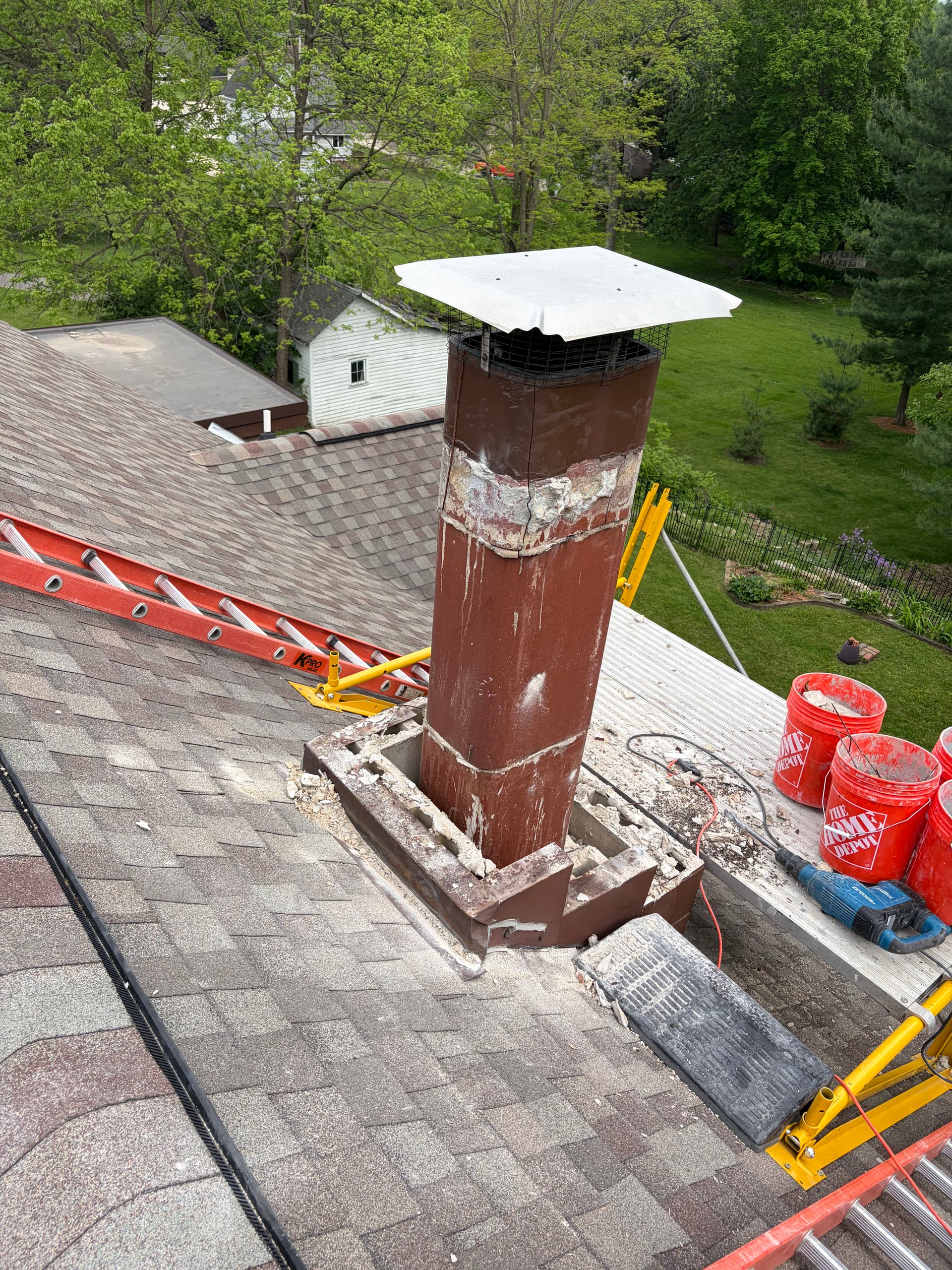
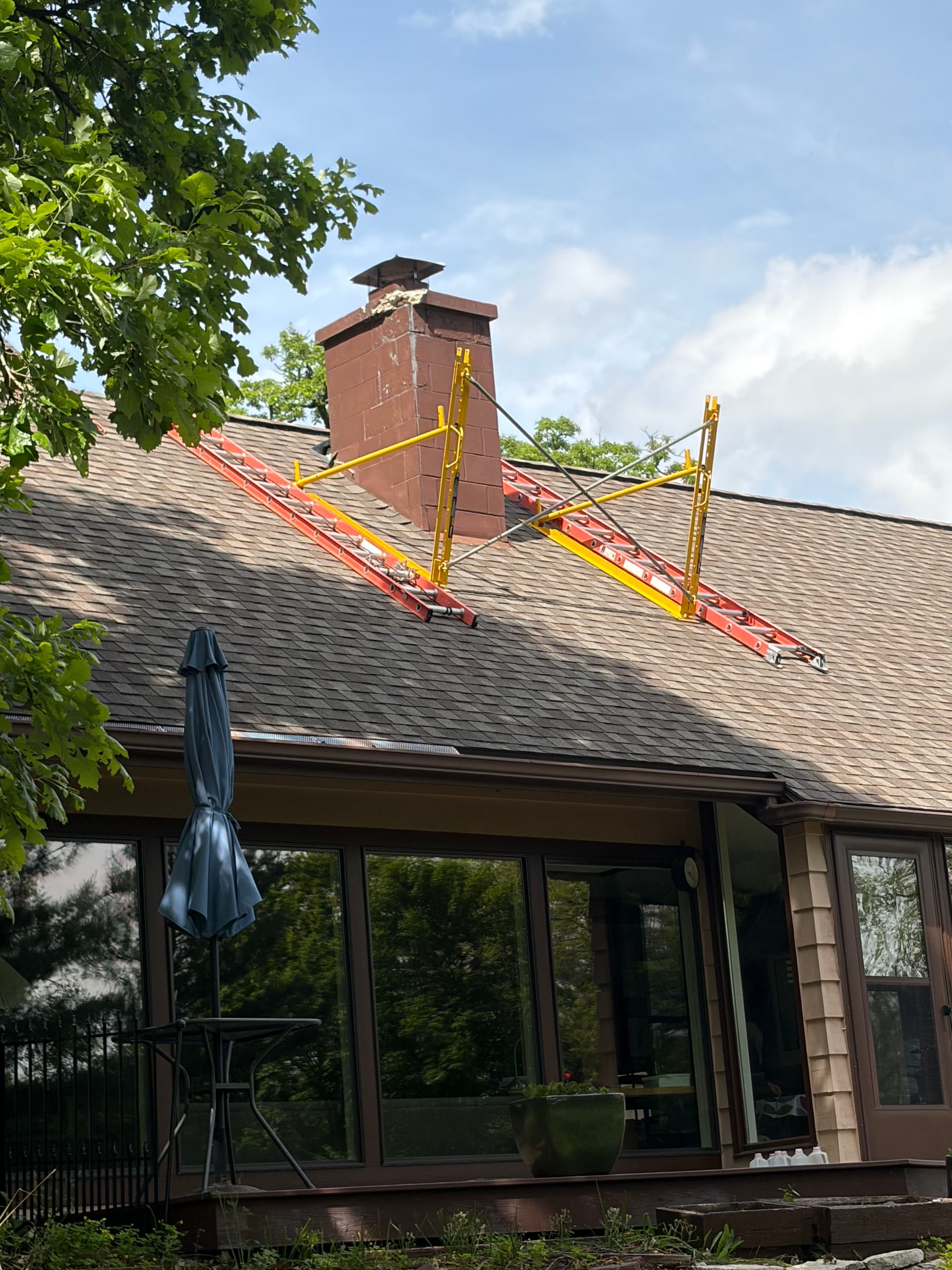
Water damage on a chimney is one of those things that sneaks up on you. A painted block chimney looks fine from the ground - until it doesn't. Paint traps moisture inside the block instead of letting it breathe, and over time that moisture works its way in, freezes, expands, and starts breaking the masonry apart from the inside out. That's exactly what we were dealing with on this job.
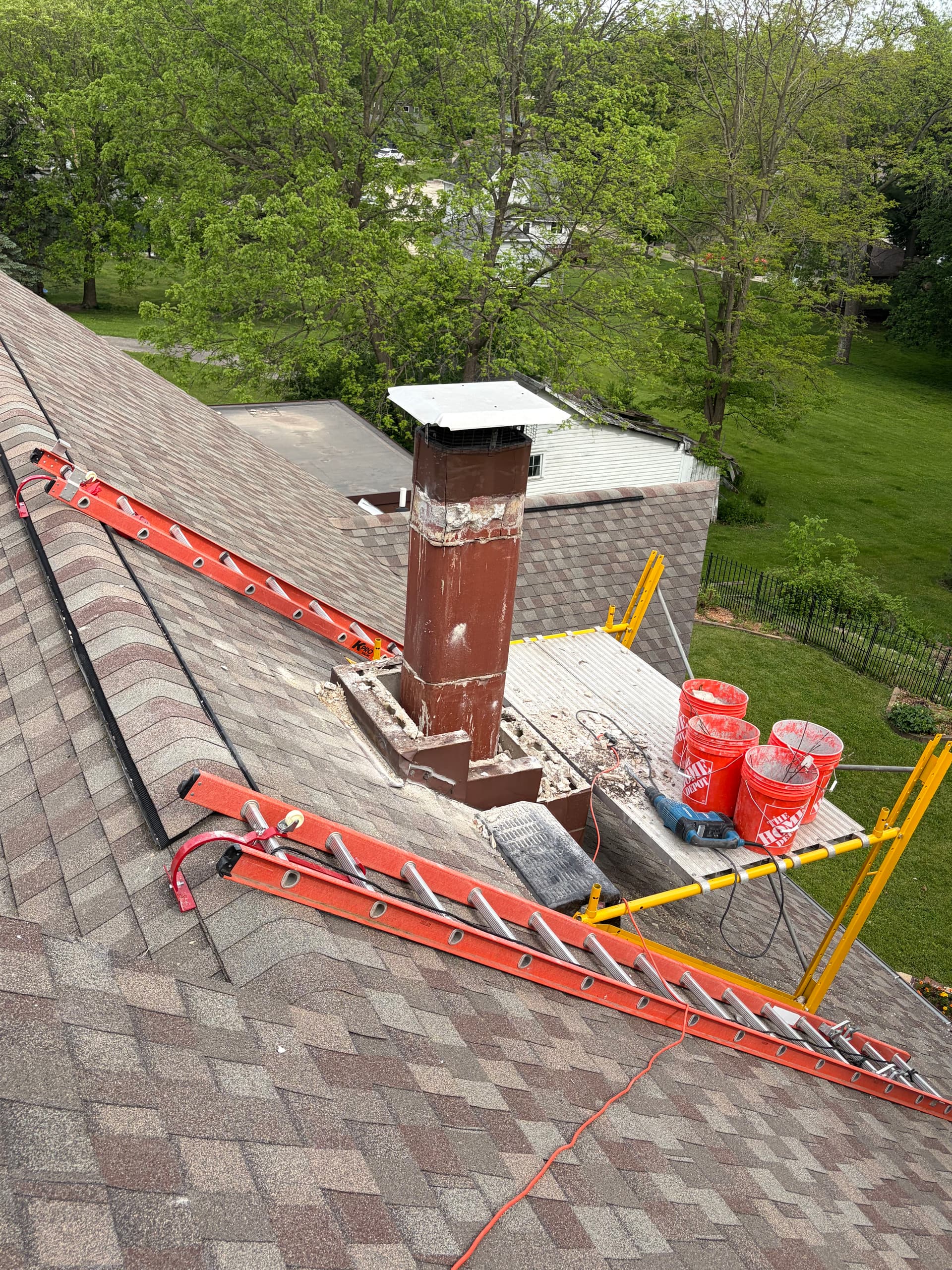
The original chimney was in rough shape. The paint had been holding moisture against the block for years, and by the time we got up there, the masonry was crumbling and the base was deteriorating badly. There was no saving what was there. We stripped it down to solid, stable material - nothing compromised, nothing patched over. Starting from a good base is the only way to do this right.
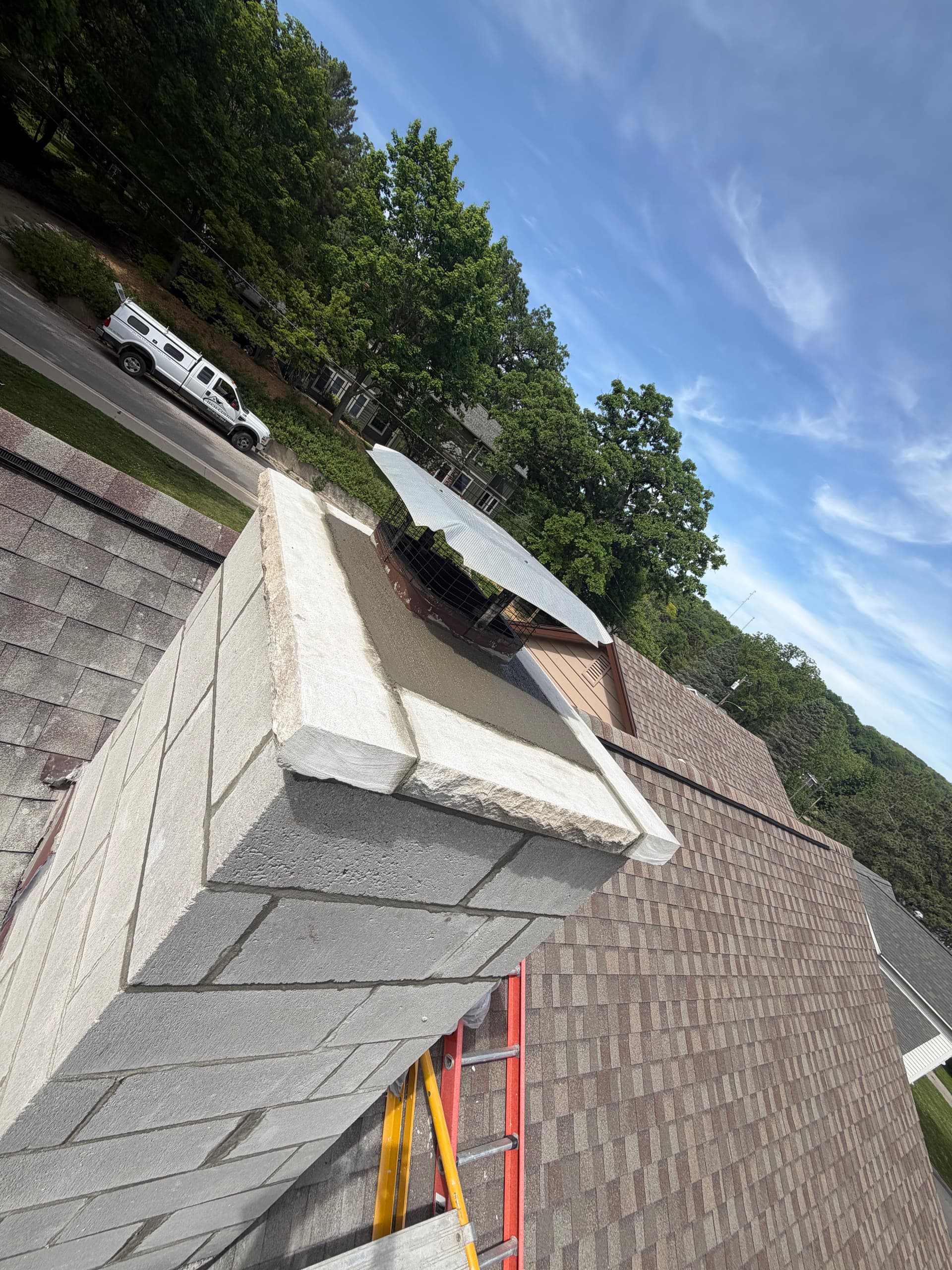
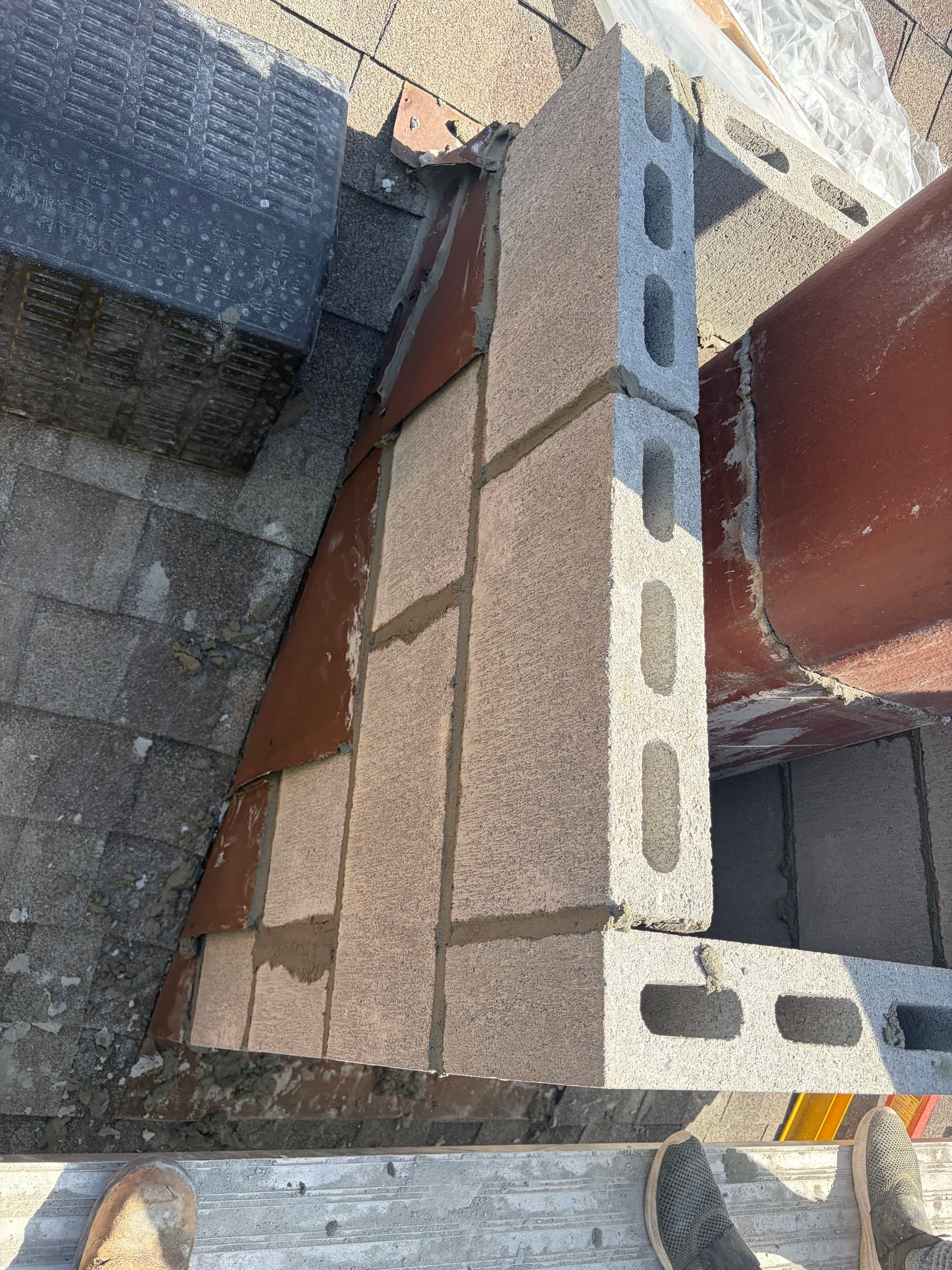
From there, we rebuilt the chimney block by block, keeping everything plumb and tight. The mortar joints are clean and consistent throughout. Once the structure was up, we poured a fresh concrete crown with a built-in drip edge. That drip edge is important - it pushes water away from the face of the chimney instead of letting it run straight down the block. It's a small detail that makes a big difference in how long the repair holds up.
A chimney rebuild like this is not a quick patch job. It takes hands-on masonry work at roof height, the right materials, and knowing where to stop tearing down so you're building on solid footing. That's what our masonry repair and chimney work is built around - doing it correctly the first time so the homeowner isn't back in the same spot in a few years.
If your chimney has visible cracking, spalling block, or a crown that's seen better days, don't wait on it. What starts as a surface issue turns into a structural one faster than most people expect. Getting eyes on it early is always the cheaper option.